
Description
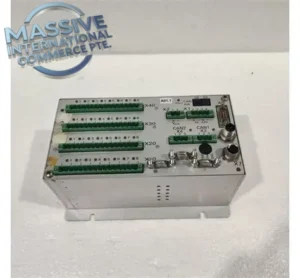
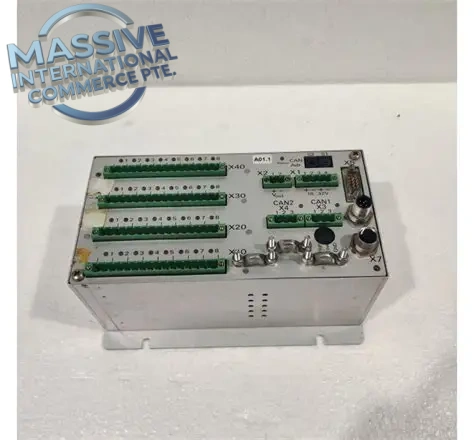
Unboxing & Physical Snapshot
- Brand & Model: NORIS N3000-IMC, NORIMOS 3000 I/O Measuring Controller
- Physical Dimensions: 8.1 in W × 4.4 in H × 2.0 in D
- Estimated Shipping Weight: 1.2 lb (packaged with ESD foam and corrugated carton)
- What’s in the Box: IMC controller unit, removable terminal plug connectors, front panel status LEDs, factory serial test certificate; DIN rail mounting clips included.
Product Introduction (Structure A: Environmental hook)
This measuring controller operates inside vessel machinery control rooms and local engine enclosures, where constant vibration, salt-laden air, and rapid temperature swings degrade lesser electronics. It samples PT100 temperature, 4–20mA pressure, and binary contact signals, then transmits validated measurements over dual redundant CAN bus to the bridge monitoring station.
Each input channel carries wire-break detection to flag broken field wiring before a critical alarm goes undetected. (Unmonitored sensor cabling is a common deficiency flagged during vessel class surveys.) The sealed front housing limits salt spray intrusion, even in poorly ventilated auxiliary machinery spaces.
Core Technical Specifications
| Parameter | Value |
|---|---|
| Platform Compatibility | NORIS NORIMOS 3000 IAMCS marine alarm & monitoring system |
| Nominal Supply Voltage | 24 VDC, operating range 18–32 VDC, dual power inputs |
| Input Channels | 8–16 configurable analog/binary inputs (variant dependent S / L) |
| Output Channels | Up to 8 digital / relay alarm outputs |
| Supported Signal Types | PT100 RTD, 4–20 mA, dry binary contacts |
| System Communication | Dual redundant CAN bus; optional Modbus TCP Ethernet |
| Power Consumption | ~15 W |
| Operating Ambient Temp | -20 °C to +70 °C |
| Storage Temperature | -40 °C to +85 °C |
| Enclosure Rating | IP20, DIN rail TS35 mount |
Global Compliance & Industry Certifications
- CE Mark
- DNV GL Marine Approval
- Additional class certifications: ABS, BV, LR available for qualified lots
- EN 50155 marine EMC compliance
DNV GL marine approval verifies performance under shipboard shock and vibration profiles, which is mandatory before fitting this unit to commercial cargo or passenger vessels. Verify specific lot certifications with OEM.
Long-Term Storage & Asset Preservation Guide
Store the N3000-IMC in its original ESD bag inside a sealed carton, away from coastal warehouse zones with airborne salt. Salt residue builds on PCB traces and creates creeping leakage currents after commissioning.
Check onboard electrolytic capacitors every 24 months for spare units held longer than three years. Controlled voltage reforming prevents capacitance drift that distorts RTD and 4–20mA readings once mounted on the DIN rail.
Do not stack heavy relay modules on top of the unit. Pressure can crack the plastic enclosure and shift internal PCB mounting points, breaking terminal connections under vessel vibration.
Physical Installation Prerequisites
Maintain a minimum of 40 mm clearance above and below the DIN rail assembly for convective air flow. Stagnant air raises internal component temperature and shortens service life during continuous engine monitoring.
Clip securely to standard TS35 DIN rail. Use the dual power input terminals separately fed from two isolated 24VDC supply branches. Connect the controller chassis to the vessel protective earth; floating chassis potentials induce common-mode noise on analog sensor loops.
Buyer’s FAQ
Q: What HS tariff code applies to NORIS N3000-IMC for cross-border shipments? A: Primary HS classification falls under 853710 for marine monitoring control assemblies. Confirm classification with your customs broker, because maritime equipment rulings vary by destination country.
Q: What country of origin appears on NORIS N3000-IMC? A: Country of Origin is Germany. This marking is printed on the unit nameplate and must appear on commercial invoices for customs and vessel audit documentation.
Q: Does N3000-IMC ship preloaded with base firmware? A: Yes. Factory firmware is preloaded on nonvolatile memory. Channel configuration, alarm thresholds and CAN bus addressing must be programmed via NORIS system software after installation.
Q: Should I purchase all-risk shipping insurance for this spare marine controller? A: Yes. Terminal block pins or internal solder joints can sustain hidden shock damage in transit; these failures often only reveal themselves after power-up on the vessel. All-risk insurance covers full replacement value.

 Start Chat


 Send an Email


